
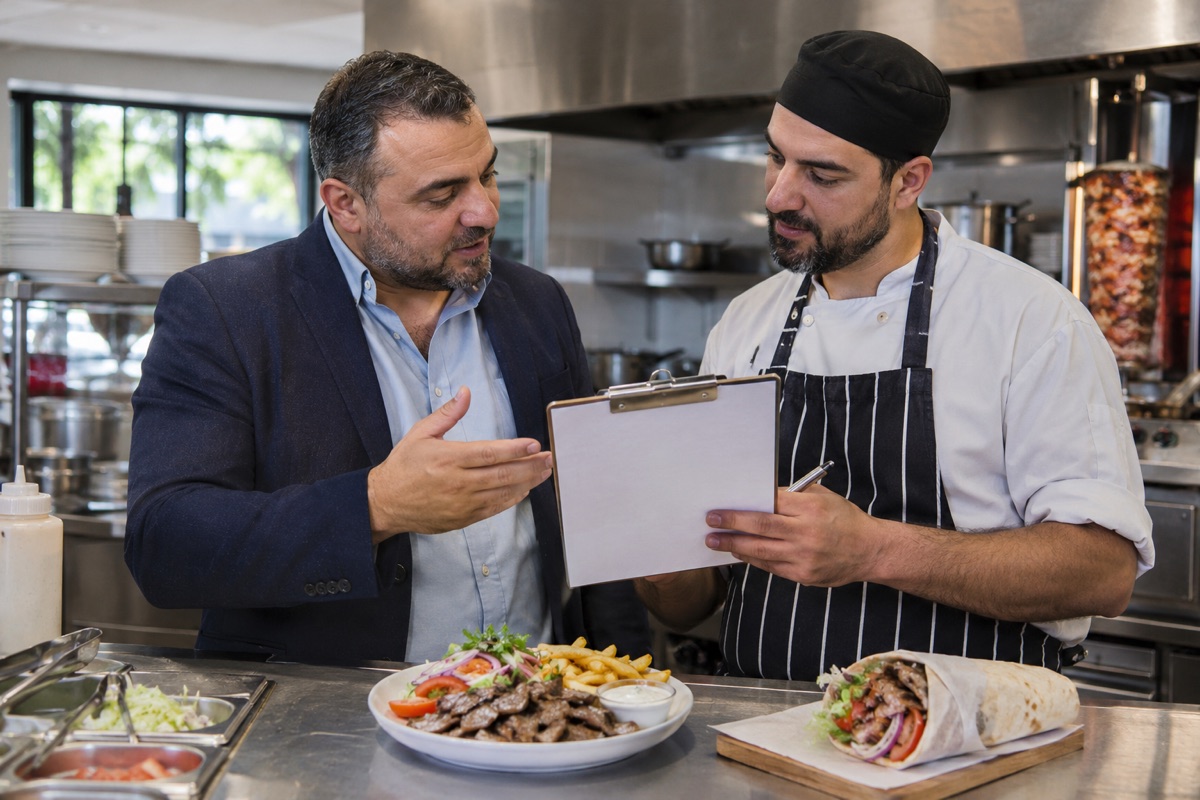
Look at more than sales totals
Once a new dish is on the menu, record how it performs during ordinary service. Sales are useful, but preparation time, portion consistency and customer feedback also deserve attention. Note which parts of the dish work well and which create difficulty. A clear observation is more actionable than a general impression that an item is popular.
Check portions against the original trial
Compare real serving quantities with the amounts used when costing the dish. Include bread, sides, sauces and packaging in the review. Ask staff whether the written assembly instructions match what happens during service. If you change a portion or component, record the new version so future purchasing estimates use the same basis.
Use feedback to refine the range
Review which options customers choose and whether the supporting ingredients suit the dish. A small adjustment may be worth testing before introducing another product. Keep dietary and ingredient descriptions aligned with current specifications. Avoid making claims based only on a customer’s impression or a general product name.
Update the supply brief
Share revised usage estimates when discussing future orders. Explain whether changes are temporary, seasonal or part of a new menu direction. Ask about current availability and confirm arrangements directly. Keeping your supplier informed of the operation’s actual requirements helps make subsequent enquiries clearer and gives your purchasing team a better record to work from.